 | • レポートコード:IMA79934NV7002 • 出版社/出版日:IMARC / 2026年2月 • レポート形態:英語、PDF、約120ページ • 納品方法:Eメール(納期:3日) • 産業分類:IT |
| Single User(1名様閲覧用) | ¥467,844 (USD2,999) | ▷ お問い合わせ |
| Five User(5名様閲覧用) | ¥623,844 (USD3,999) | ▷ お問い合わせ |
| Corporate User(閲覧人数無制限) | ¥779,844 (USD4,999) | ▷ お問い合わせ |
• お支払方法:銀行振込(納品後、ご請求書送付)
レポート概要
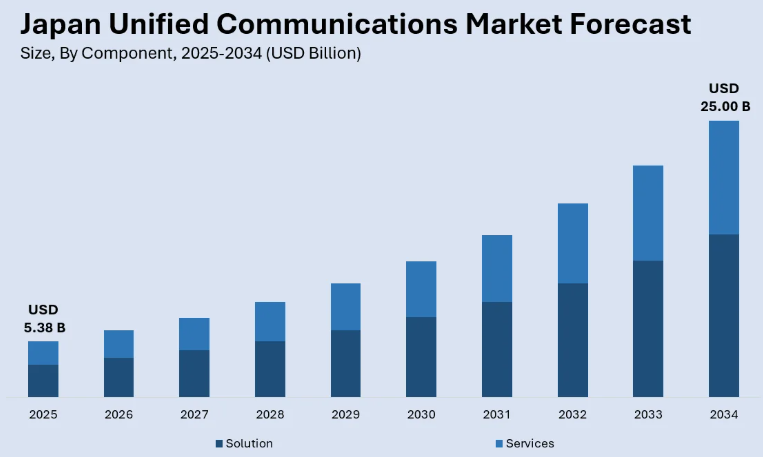
| 日本のユニファイド・コミュニケーション市場規模は、2025年に53.8億米ドルと評価されており、2034年までに250.00億米ドルに達すると予測されています。これは、日本において従来のオンプレミス型電話システムからクラウドホスト型UCaaSプラットフォームへの移行が加速していることを背景に、2026年から2034年にかけて年平均成長率(CAGR)18.62%で成長すると見込まれています。例えば、MMリサーチインスティテュートの調査によると、PaaSとIaaSの両方のサービスを利用している日本企業の半数以上がAWSサービスを利用しています。これが、日本のユニファイドコミュニケーション市場のシェア拡大を直接後押ししています。 日本のユニファイドコミュニケーション業界分析 - 主な洞察 2026年の日本のユニファイドコミュニケーション市場の動向とダイナミクス ソリューションは、2025年に 構成要素の62.0%を占めており、ソリューション分野内で最大のサブセグメントとなっています。ハイブリッドワークの爆発的な普及と、日本の巨大なMICE(会議・インセンティブ旅行・コンベンション・展示会)セクターにより、リアルタイムビデオは企業の主要なコミュニケーション手段として定着した。 製品別では、ホステッド型が 2025年に市場の55.0%を占めており、これが主要な導入形態としてシェアを伸ばしている。クラウドの経済性、ほぼ全域をカバーする5G、そして日本のデジタル庁が掲げる「クラウドファースト原則」が相まって、オンプレミス型インフラに対する最後の構造的な反対論を打ち砕いている。 組織規模別に見ると、2025年には大企業が市場の62.0%を占める — これは、全社的なUC導入が資本集約的であることや、日本の大手企業がデジタルワークプレイスプログラムに投じている巨額のIT変革予算を反映している。 2025年のエンドユーザーシェアのうち、企業が48.0%を占める。これは、日本の大企業セクターを中核とし、断片化したPBXや電子メールベースのワークフローから、統合されたオムニチャネル・コミュニケーション・プラットフォームへの移行が加速していることが背景にある。 2025年には、関東地方が市場シェアの44.0%を占め、地域別で首位となる—この圧倒的なシェアは、多国籍企業の本社や主要金融機関が東京に集中していること、そして国内で最も高い企業IT購買担当者の密度を誇り、これらすべてがUC導入の最前線に位置していることに起因する。 市場動向 AIネイティブ機能が、企業の生産性レイヤーとして音声・ビデオ会議を変革している UCプラットフォームに直接組み込まれたAI機能により、音声・ビデオ会議は単なるコミュニケーションツールから、インテリジェントな生産性レイヤーへと変貌を遂げつつある。シスコは、2025年のガートナー「UCaaSマジック・クアドラント」において7年連続で「リーダー」に選出された。同社のWebex AIアシスタントは、プラットフォーム全体でネイティブに、会議の自動要約、リアルタイム文字起こし、ライブ翻訳、感情分析などの機能を提供している。 「クラウドファースト」の政府方針により、公共部門全体でホスト型UCの導入が加速している 日本のデジタルトランスフォーメーションの中核機関であるデジタル庁は、2021年に政府クラウドプラットフォームの開発を開始した。この取り組みは、12の中央省庁、1,788の地方自治体、および様々な準公的組織を支援するため、安全で柔軟、高速かつコスト効率の高いクラウドインフラを構築することを目的としている。公共情報システムにおけるクラウドサービスの適正利用に関する政府ガイドラインに沿い、同庁は公共部門全体における政府クラウド利用の包括的な近代化と改革を推進している。公共部門での導入がクラウドネイティブな通信アーキテクチャへと移行する中、この政策主導の転換は、日本のユニファイドコミュニケーション市場のトレンドを形作る最も重要な構造的要因の一つとなっている。 ハイブリッドワークの定着が、クラウドUCインフラへの需要を恒久的に押し上げている ハイブリッドワークは、日本において恒久的な組織構造となっている。総務省のデータによると、2023年8月時点で、公共部門を除く従業員100人以上の日本企業の約49.9%がテレワークを導入している。 UCaaSプラットフォームの統合: 企業は、分散していたコミュニケーションツールを単一ベンダーのUCaaSプラットフォームに統合しており、これにより統合の複雑さが軽減されるとともに、機能豊富なクラウドプランへの1ユーザーあたりの支出が増加している。 5Gを活用したエッジUCの導入: 2025年までに人口の90%をカバーする見込みの、日本におけるほぼ全国的な5Gの普及により、リアルタイムのARコラボレーションや4Kモバイルビデオ会議など、低遅延のエッジコンピューティング活用事例が可能になっています。 コンタクトセンターとUCの融合: 社内外のシームレスなコミュニケーションワークフローを求める企業の需要を背景に、ベンダーが顧客エンゲージメント機能を統合コラボレーションスイートに直接組み込むことで、UCaaSとCCaaSの境界は薄れつつある。 セキュリティとデータ主権への注力: 日本の個人情報保護法(APPI)改正および経済安全保障促進法により、企業はUCベンダーを選定する際、国内データ保管、主権クラウド機能、ISO/IEC 27001認証を主要な調達基準として評価せざるを得なくなっている。 成長要因 ハイパースケーラーによる投資の波が、企業のUCワークロード向けクラウドインフラを構築している ホスト型UCプラットフォームが依存するクラウドインフラの構築を通じて、大規模な海外からの技術投資が日本のユニファイドコミュニケーション市場の成長を支えている。2024年4月、マイクロソフトは、300万人のAIスキル研修を含む、日本におけるAIおよびクラウドインフラへの29億米ドルの投資を発表した。 「2025年のデジタル・クリフ」という緊急性が、企業のレガシーシステムの置き換えを迫っている 経済産業省は、企業がレガシーITシステムの近代化に失敗した場合、技術的負債のコストが年間12兆円に達する可能性があると指摘した。この緊急性により、レガシーPBXや断片化した通信インフラを含む大規模な企業ITの置き換えが促進され、統合型UCプラットフォームへの移行が進んでいる。大企業は、変革予算の最大の部分をホスト型UCの導入に充てている。 人手不足が、業界を問わず自動化とAI組み込み型UCの導入を後押し 日本における構造的な人手不足は、UC導入の強力な構造的推進力となっている。日本の組織の70%以上が、クラウドおよびデジタル分野の人員不足を報告しており、企業はAI支援型UCツール、自動通話ルーティング、AI生成の会議要約、インテリジェントな文字起こしを導入し、人員を比例的に増やすことなく、コミュニケーションのオーバーヘッドを削減し、生産性を維持している。これにより、機能豊富なUCaaSプランにおける有料ライセンス数の拡大が加速しています。 政府によるデジタルトランスフォーメーションの推進: 経済産業省によるテレワークツール導入への財政支援や、デジタル庁のクラウド認証エコシステムは、企業のUC移行コストを直接補助しています。 中小企業におけるクラウド導入の拡大: 資本的なインフラ投資を不要にする手頃な価格のサブスクリプション型ホスト型ソリューションに後押しされ、日本の中小企業セグメントはUC分野において最も急速な成長を遂げています。 医療分野における遠隔医療・UCの拡大: 遠隔医療やオンライン診療の導入拡大により、医療セクターでは、音声、ビデオ、患者データシステムを統合した、HIPAA準拠のセキュアなUCプラットフォームへの投資が進んでいる。 Microsoft Teamsプラットフォームの優位性: Microsoft Teams Phoneの月間アクティブユーザー数は1,500万人を突破し、前年比40%の成長を記録した。また、日本で広く導入されているMicrosoft 365との深い統合により、企業全体のUCがクラウド通話プラットフォームへと統合されつつある。 市場の制約要因 根強いレガシーシステムの定着と組織的な変革への抵抗: 多くの日本の大企業や政府機関は、社内ワークフロー全体に複雑な依存関係を持つ、定着したオンプレミスの電話・通信インフラを運用している。リスク回避的な組織文化や部門横断的な統合の課題により、移行期間が長期化し、デジタルトランスフォーメーションの意向が明確に示されている場合でも、UCの導入スピードが鈍化している。 クラウドおよびUC導入の有資格人材の深刻な不足: 日本では、複雑なクラウドUC環境を展開、統合、管理するスキルを持つ専門家の構造的な不足に直面している。この人材不足は導入サイクルを長期化させ、コンサルティングコストを押し上げ、組織にUCの展開を延期または縮小することを強いることになり、トランスフォーメーション予算を確保し、明確なビジネスケースを持つ企業の間でさえ、市場の成長を制約している。 厳格なデータ主権および規制遵守要件:APPI(個人情報保護法)の改正や「経済安全保障促進法」など、日本におけるデータ保護の枠組みは進化を続けており、通信データの保存・処理場所や方法に対して厳格な要件を課しています。グローバルなUCベンダーは、ローカルデータレジデンシーやソブリンクラウド機能に多額の投資を余儀なくされており、これにより導入の複雑さが増すとともに、規制対象業界が利用可能な、完全にコンプライアンスに準拠したプラットフォームの選択肢が狭まっています。 日本のユニファイド・コミュニケーション市場セグメンテーション分析 コンポーネントに関する洞察 音声・ビデオ会議は、日本のユニファイド・コミュニケーション・ソリューション市場において支配的なサブセグメントであり、ビデオ通話を企業コラボレーションの標準的な形態としたハイブリッドワーク革命によって、その地位は確固たるものとなっている。日本のMICE(ミーティング、インセンティブ、カンファレンス、展示会)セクターは、アジア最大級の企業向けビデオインフラ需要の集中地の一つであり、東京、大阪、名古屋の大手企業では、バーチャルおよびハイブリッド形式のイベントが継続的に開催されている。 製品インサイト 日本において、ホスト型UCはオンプレミス展開を決定的に追い抜いた。その背景には、政府によるクラウド導入義務化、ハイパースケーラーによるインフラ投資、そしてレガシーなオンプレミスベンダーの撤退が加速していることが挙げられる。Microsoft Azure、AWS、Google Cloud、Oracle、Sakura Internetなどは、政府認定のクラウドベンダーの一部であり、これらのベンダーが扱う企業向け通信ワークロードはすべてホスト型アーキテクチャ上で稼働している。 組織規模に関するインサイト 大企業は、全社規模でUC変革プログラムを大規模に展開できる能力により、日本のユニファイドコミュニケーション市場を牽引している。日本の主要銀行の一つであるみずほフィナンシャルグループは、2025年にマルチクラウド型のマーケティング・コミュニケーションエンジンに1,000億円を計上しており、これは日本の企業セクターに流れるエンタープライズグレードのUC投資の規模を如実に示している。日本の「2025年デジタルクリフ」という緊急性が、大企業のUC調達に特徴的なパターンを生み出している。組織は単に既存の電話システムをクラウド版に移行するだけでなく、音声、ビデオ、メッセージング、コンタクトセンター機能を単一のプラットフォームに統合した、完全に統合されたUCスイートを導入している。 エンドユーザーに関する洞察 日本におけるユニファイド・コミュニケーション市場の主要な原動力は企業であり、その範囲は金融サービス、製造、小売、ITサービス、物流に及びます。これらはすべて、UCプラットフォームが解決するために特別に設計された、複雑で複数の拠点にまたがる通信インフラの要件を持つセクターです。従業員数1,000人以上の大企業は、平均177のSaaSアプリケーションを導入しており、それぞれが集中型通信プラットフォームとの統合を必要としています。 地域別インサイト 日本のユニファイド・コミュニケーション市場における関東の優位性は、事実上すべての主要日本企業の本社が東京に集まっているという構造的な要因に支えられています。日本のデジタル庁は東京都千代田区紀尾井町に本部を置いており、その「政府クラウド」調達枠組みは、同地域に本部を置く各省庁における公共部門のUC導入に直接的な影響を与えています。2024年4月、マイクロソフトはAIスキルの研修を300万人に実施し、新たな研究インフラを構築するなど、総額29億米ドルの対日投資を発表した。この投資は同社の東京事業を中核としており、関東が日本において最も成熟したエンタープライズUC市場であるという地位をさらに強固なものにした。 市場見通し(2026年~2034年) 日本のユニファイド・コミュニケーション市場の将来展望はどのようになるか? 日本のユニファイド・コミュニケーション市場は、2034年まで着実な収益成長を維持すると予想される。 UCプラットフォーム全体へのAI組み込みの進展、自動化を優先するコミュニケーション戦略を後押しする日本の構造的な労働力不足、そしてクラウドファーストのインフラに対する政府の揺るぎない取り組みが、予測期間を通じて市場の堅調な年平均成長率(CAGR)を支えるだろう。中小企業のクラウド導入が加速するにつれ、日本のSMEセグメントにおけるクラウド導入が進展しており、対象となるUC市場は大企業を超えて大幅に拡大する見込みです。これにより、2030年代初頭まで市場拡大の軌道を維持する第2の成長波が生まれるでしょう。 日本のユニファイド・コミュニケーション市場 - 主要プレイヤー 日本のユニファイド・コミュニケーション市場には、日本の企業市場に深く浸透しているグローバルなプラットフォームベンダーと、政府や公共部門との強固な関係を持つ国内のテクノロジーリーディングカンパニーが参入している。 日本のユニファイド・コミュニケーション市場の主要プレイヤーには、マイクロソフト、富士通、ミテル、ヴォナージュ(Telefonaktiebolaget LM Ericsson)などが挙げられる。 最新動向・ニュース 2025年10月、NECは、CSGインターナショナルを債務を含め29億米ドル(4,385億円)で買収すると発表した。これは、NECが従来のオンプレミス型UCからクラウドネイティブなビジネスシステムへと転換する中で、同社のエンタープライズソフトウェアポートフォリオを拡大するための重要な動きである。この買収は、マネージドサービスおよびクラウドソフトウェアに向けたNECの広範な戦略的再編を反映している。 2024年4月、マイクロソフトは、日本におけるAIおよびクラウドインフラの拡充に向けて29億米ドルの投資を発表しました。これには、300万人を対象としたAIスキルの研修、新しい研究所の開設、および日本政府との提携によるサイバーセキュリティ能力の強化などの計画が含まれています。この投資は、Microsoft TeamsおよびAzure Communications Servicesの導入を直接支援するものであり、日本の企業および公共部門組織において、マイクロソフトが生産性向上およびユニファイドコミュニケーションの主要プラットフォームとしての地位を強化するとともに、ホスト型UC市場の成長軌道を加速させることになる。 |
The Japan unified communications market size, valued at USD 5.38 Billion in 2025, is projected to reach USD 25.00 Billion by 2034, growing at a CAGR of 18.62% from 2026-2034, driven by Japan’s accelerating shift from legacy on-premises telephony to cloud-hosted UCaaS platforms. For instance, AWS services are used by over half of the Japanese companies utilizing both PaaS and IaaS services, according to a MM Research Institute survey. This is directly propelling Japan unified communications market share.
Japan Unified Communications Industry Analysis – Key Insights
• Solution owns 62.0% of the component in 2025- the single largest sub-segment within solutions. The explosion of hybrid work and Japan’s massive MICE sector has permanently elevated real-time video as the primary enterprise communication modality.
• Hosted commands 55.0% of the market by product in 2025- the majority deployment mode, and is climbing. Cloud economics, near-universal 5G coverage, and Japan’s Digital Agency Cloud-First Principle are collectively dismantling the last structural arguments for on-premises infrastructure.
• Large enterprises drive 62.0% of the market by organization size in 2025- reflecting the capital-intensive nature of enterprise-wide UC rollouts and the outsized IT transformation budgets that Japan’s largest corporations are committing to digital workplace programs.
• Enterprises account for 48.0% of end user share in 2025- the dominant vertical, anchored by Japan’s large corporate sector and its accelerating migration away from fragmented PBX and email-based workflows toward integrated omni-channel communication platforms.
• Kanto Region leads regionally with 44.0% of the market in 2025- a commanding share driven by Tokyo’s concentration of multinational headquarters, major financial institutions, and the highest density of enterprise IT buyers in the country, all at the forefront of UC adoption.
•
Japan Unified Communications Market Trends and Dynamics 2026
Market Trends
AI-native features are reshaping audio and video conferencing as the enterprise productivity layer
AI capabilities embedded directly into UC platforms are transforming audio and video conferencing from a communication tool into an intelligent productivity layer. Cisco was named a Leader in the 2025 Gartner Magic Quadrant for UCaaS for the 7th consecutive year, with its Webex AI Assistant delivering automated meeting summaries, real-time transcription, live translation, and sentiment analysis natively across the platform.
Cloud-first government mandates accelerating hosted UC adoption across the public sector
Serving as the central authority for Japan’s digital transformation, the Digital Agency initiated the development of a government cloud platform in 2021. The initiative aims to establish a secure, flexible, fast, and cost-efficient cloud infrastructure to support 12 central ministries, 1,788 local government bodies, and various semi-public organizations. In line with government guidelines for the proper use of cloud services in public information systems, the agency is advancing a comprehensive modernization and reform of government cloud utilization across the public sector. This policy-driven shift is one of the most significant structural drivers shaping Japan unified communications market trends as public-sector deployments increasingly convert to cloud-native communication architectures.
Hybrid work institutionalisation is permanently elevating demand for cloud UC infrastructure
Hybrid work has become a permanent organisational structure in Japan: according to the Ministry of Internal Affairs and Communications, as of August 2023, approximately 49.9% of Japanese companies with 100 or more employees adopted telework practices, excluding the public sector.
• UCaaS Platform Consolidation: Enterprises are consolidating fragmented communication tools onto single-vendor UCaaS platforms, reducing integration complexity and driving higher per-seat spending on feature-rich cloud plans.
• 5G-Enabled Edge UC Deployments: Japan’s near-universal 5G coverage, with 90% population coverage by 2025, is enabling low-latency edge computing use cases, including real-time AR collaboration and 4K mobile video conferencing.
• Contact Centre-UC Convergence: The boundary between UCaaS and CCaaS is dissolving as vendors integrate customer engagement capabilities directly into unified collaboration suites, driven by enterprise demand for seamless internal and external communication workflows.
• Security and Data Sovereignty Focus: Japan’s APPI amendments and Economic Security Promotion Act are compelling enterprises to evaluate UC vendors on in-country data residency, sovereign cloud capability, and ISO/IEC 27001 certification as primary procurement criteria.
Growth Drivers
Hyperscaler investment wave is building cloud infrastructure for enterprise UC workloads
Massive foreign technology investment is underpinning Japan unified communications market growth by building the cloud infrastructure on which hosted UC platforms depend. In April 2024, Microsoft announced a USD 2.9 billion investment in AI and cloud infrastructure in Japan, including training 3 million people in AI skills.
“2025 Digital Cliff” urgency is forcing enterprise legacy system replacements
Japan’s Ministry of Economy, Trade and Industry identified that if enterprises fail to modernise legacy IT systems, technical-debt costs could reach JPY 12 trillion annually. This urgency is catalysing large-scale enterprise IT replacements, including legacy PBX and fragmented communication infrastructure, with integrated UC platforms. Large enterprises are committing the largest share of transformation budgets to hosted UC deployments.
Labour shortage driving automation and AI-embedded UC adoption across industries
Japan’s structural labour shortage is a powerful systemic driver of UC adoption. With more than 70% of Japanese organisations reporting understaffing in cloud and digital disciplines, enterprises are deploying AI-assisted UC tools, automated call routing, AI-generated meeting summaries, and intelligent transcription to compress communication overhead and maintain productivity without proportional headcount growth. This is accelerating paid seat expansion on feature-rich UCaaS tiers.
• Government Digital Transformation Mandates: METI’s financial support for telework tool adoption and the Digital Agency’s cloud certification ecosystem are directly subsidising enterprise UC migration costs.
• Expanding SME Cloud Adoption: Japan’s SME segment is growing at the fastest pace within UC, driven by affordable subscription-based hosted solutions that eliminate capital infrastructure requirements.
• Healthcare Telemedicine UC Expansion: Rising adoption of telemedicine and virtual consultations is driving healthcare sector investment in HIPAA-compliant, secure UC platforms that integrate voice, video, and patient data systems.
• Microsoft Teams Platform Dominance: Microsoft Teams Phone surpassed 15 million monthly active users, representing a 40% year-over-year growth, and its deep integration with Japan’s pervasive Microsoft 365 deployments is driving enterprise-wide UC consolidation onto cloud calling platforms.
Market Restraints
Deep-rooted legacy system entrenchment and organisational resistance to change: Many large Japanese enterprises and government agencies operate entrenched on-premises telephony and communication infrastructure with complex dependencies across internal workflows. Risk-averse organisational cultures and cross-departmental integration challenges create prolonged migration timelines, slowing the velocity of UC adoption even where digital transformation intent is clearly present.
Acute shortage of qualified cloud and UC implementation talent: Japan faces a structural deficit of professionals with the skills to deploy, integrate, and manage complex cloud UC environments. This talent gap extends implementation cycles, raises consultancy costs, and forces organisations to delay or scale back UC rollouts, constraining market growth even among enterprises with committed transformation budgets and clear business cases.
Stringent data sovereignty and regulatory compliance requirements: Japan’s evolving data protection framework, including APPI amendments and the Economic Security Promotion Act, imposes strict requirements on where and how communication data is stored and processed. Global UC vendors must invest substantially in local data residency and sovereign cloud capabilities, adding complexity to deployments and narrowing the field of fully compliant platform options available to regulated industries.
Japan Unified Communications Market Segmentation Analysis
Component Insights
Audio and video conferencing is the dominant subsegment of Japan’s unified communications solutions landscape, a position cemented by the hybrid work revolution that has made video calls the default mode of enterprise collaboration. Japan’s MICE sector, meetings, incentives, conferences, and exhibitions, represents one of Asia’s largest concentrated demand pools for enterprise video infrastructure, with major corporations in Tokyo, Osaka, and Nagoya running continuous virtual and hybrid event formats.
Product Insights
Hosted UC decisively overtaken on-premises deployment in Japan, driven by the convergence of government cloud mandates, hyperscaler infrastructure investment, and the accelerating exit of legacy on-premises vendors. Microsoft Azure, AWS, Google Cloud, Oracle, and Sakura Internet are some of the government cloud-certified vendors, and all their enterprise communication workloads run on hosted architectures.
Organization Size Insights
Large enterprises command the Japan unified communications market through their ability to deploy enterprise-wide UC transformation programs at scale. Mizuho Financial Group, one of Japan’s major banking institutions, earmarked JPY 100 billion for a multi-cloud marketing and communications engine in 2025, illustrating the magnitude of enterprise-grade UC investments flowing through Japan’s corporate sector. Japan’s “2025 Digital Cliff” urgency is producing a distinctive pattern in large enterprise UC procurement: organisations are not simply migrating existing telephony to cloud equivalents, but deploying fully integrated UC suites that converge voice, video, messaging, and contact centre capabilities on a single platform.
End User Insights
Enterprises are the primary engine of Japan’s unified communications market, spanning financial services, manufacturing, retail, IT services, and logistics, all sectors with complex, multi-site communication infrastructure requirements that UC platforms are purpose-built to address. Large enterprises with over 1,000 employees are deploying an average of 177 SaaS applications, each requiring integration with centralised communication platforms.
Regional Insights
Kanto’s dominance in Japan’s unified communications market is structurally anchored by Tokyo’s role as the headquarters city for virtually every major Japanese corporation. Japan’s Digital Agency is headquartered in Tokyo at the Kioicho district in Chiyoda Ward, and its Government Cloud procurement framework directly shapes public-sector UC adoption across ministries headquartered in the region. In April 2024, Microsoft’s USD 2.9 billion Japan investment, which includes training 3 million people in AI skills and building new research infrastructure, was centred on its Tokyo operations, reinforcing Kanto’s position as Japan’s deepest enterprise UC market.
Market Outlook (2026-2034)
What is the future outlook of the Japan unified communications market?
The Japan unified communications market is expected to sustain steady revenue growth through 2034.
The convergence of AI embedding across UC platforms, Japan’s structural labour shortage driving automation-first communication strategies, and the government’s unwavering commitment to cloud-first infrastructure will sustain the market’s strong CAGR through the forecast period. As SME cloud adoption accelerates, Japan’s SME segment cloud adoption is advancing, and the addressable UC market will broaden substantially beyond large enterprises, creating a second growth wave that extends the market expansion trajectory well into the early 2030s.
Japan Unified Communications Market – Leading Key Players
The Japan unified communications market is served by a mix of global platform vendors with deep Japan enterprise penetration and domestic technology champions with strong government and public-sector relationships.
Some of the key market players in the Japan unified communications market are Microsoft, Fujitsu, Mitel, Vonage (Telefonaktiebolaget LM Ericsson), etc.
Latest Development & News
• In October 2025, NEC Corporation announced the acquisition of CSG International for USD 2.9 billion or JPY438.5 billion, including debt, a major move to expand NEC’s enterprise software portfolio as it pivots away from legacy on-premises UC toward cloud-native business systems. The acquisition reflects NEC’s broader strategic repositioning toward managed services and cloud software.
• In April 2024, Microsoft announced a USD 2.9 billion investment to expand AI and cloud infrastructure in Japan, inclusive of plans to train 3 million people in AI skills, open a new research laboratory, and boost cybersecurity capabilities in partnership with the Japanese government. The investment directly supports Microsoft Teams and Azure Communications Services deployments, reinforcing Microsoft’s position as the dominant productivity and unified communications platform across Japan’s enterprise and public-sector organisations and accelerating the hosted UC market’s growth trajectory.
1 Preface
2 Scope and Methodology
2.1 Objectives of the Study
2.2 Stakeholders
2.3 Data Sources
2.3.1 Primary Sources
2.3.2 Secondary Sources
2.4 Market Estimation
2.4.1 Bottom-Up Approach
2.4.2 Top-Down Approach
2.5 Forecasting Methodology
3 Executive Summary
4 Japan Unified Communications Market – Introduction
4.1 Overview
4.2 Market Dynamics
4.3 Industry Trends
4.4 Competitive Intelligence
5 Japan Unified Communications Market Landscape
5.1 Historical and Current Market Trends (2020-2025)
5.2 Market Forecast (2026-2034)
6 Japan Unified Communications Market – Breakup by Component
6.1 Solution
6.1.1 Overview
6.1.2 Historical and Current Market Trends (2020-2025)
6.1.3 Market Segmentation
6.1.3.1 Instant and Unified Messaging
6.1.3.2 Audio and Video Conferencing
6.1.3.3 IP Telephony
6.1.3.4 Others
6.1.4 Market Forecast (2026-2034)
6.2 Services
6.2.1 Overview
6.2.2 Historical and Current Market Trends (2020-2025)
6.2.3 Market Segmentation
6.2.3.1 Professional Services
6.2.3.2 Managed Services
6.2.4 Market Forecast (2026-2034)
7 Japan Unified Communications Market – Breakup by Product
7.1 On-premises
7.1.1 Overview
7.1.2 Historical and Current Market Trends (2020-2025)
7.1.3 Market Forecast (2026-2034)
7.2 Hosted
7.2.1 Overview
7.2.2 Historical and Current Market Trends (2020-2025)
7.2.3 Market Forecast (2026-2034)
8 Japan Unified Communications Market – Breakup by Organization Size
8.1 Small and Medium-sized Enterprises
8.1.1 Overview
8.1.2 Historical and Current Market Trends (2020-2025)
8.1.3 Market Forecast (2026-2034)
8.2 Large Enterprises
8.2.1 Overview
8.2.2 Historical and Current Market Trends (2020-2025)
8.2.3 Market Forecast (2026-2034)
9 Japan Unified Communications Market – Breakup by End User
9.1 Enterprises
9.1.1 Overview
9.1.2 Historical and Current Market Trends (2020-2025)
9.1.3 Market Forecast (2026-2034)
9.2 Education
9.2.1 Overview
9.2.2 Historical and Current Market Trends (2020-2025)
9.2.3 Market Forecast (2026-2034)
9.3 Government
9.3.1 Overview
9.3.2 Historical and Current Market Trends (2020-2025)
9.3.3 Market Forecast (2026-2034)
9.4 Healthcare
9.4.1 Overview
9.4.2 Historical and Current Market Trends (2020-2025)
9.4.3 Market Forecast (2026-2034)
9.5 Others
9.5.1 Historical and Current Market Trends (2020-2025)
9.5.2 Market Forecast (2026-2034)
10 Japan Unified Communications Market – Breakup by Region
10.1 Kanto Region
10.1.1 Overview
10.1.2 Historical and Current Market Trends (2020-2025)
10.1.3 Market Breakup by Component
10.1.4 Market Breakup by Product
10.1.5 Market Breakup by Organization Size
10.1.6 Market Breakup by End User
10.1.7 Key Players
10.1.8 Market Forecast (2026-2034)
10.2 Kansai/Kinki Region
10.2.1 Overview
10.2.2 Historical and Current Market Trends (2020-2025)
10.2.3 Market Breakup by Component
10.2.4 Market Breakup by Product
10.2.5 Market Breakup by Organization Size
10.2.6 Market Breakup by End User
10.2.7 Key Players
10.2.8 Market Forecast (2026-2034)
10.3 Central/ Chubu Region
10.3.1 Overview
10.3.2 Historical and Current Market Trends (2020-2025)
10.3.3 Market Breakup by Component
10.3.4 Market Breakup by Product
10.3.5 Market Breakup by Organization Size
10.3.6 Market Breakup by End User
10.3.7 Key Players
10.3.8 Market Forecast (2026-2034)
10.4 Kyushu-Okinawa Region
10.4.1 Overview
10.4.2 Historical and Current Market Trends (2020-2025)
10.4.3 Market Breakup by Component
10.4.4 Market Breakup by Product
10.4.5 Market Breakup by Organization Size
10.4.6 Market Breakup by End User
10.4.7 Key Players
10.4.8 Market Forecast (2026-2034)
10.5 Tohoku Region
10.5.1 Overview
10.5.2 Historical and Current Market Trends (2020-2025)
10.5.3 Market Breakup by Component
10.5.4 Market Breakup by Product
10.5.5 Market Breakup by Organization Size
10.5.6 Market Breakup by End User
10.5.7 Key Players
10.5.8 Market Forecast (2026-2034)
10.6 Chugoku Region
10.6.1 Overview
10.6.2 Historical and Current Market Trends (2020-2025)
10.6.3 Market Breakup by Component
10.6.4 Market Breakup by Product
10.6.5 Market Breakup by Organization Size
10.6.6 Market Breakup by End User
10.6.7 Key Players
10.6.8 Market Forecast (2026-2034)
10.7 Hokkaido Region
10.7.1 Overview
10.7.2 Historical and Current Market Trends (2020-2025)
10.7.3 Market Breakup by Component
10.7.4 Market Breakup by Product
10.7.5 Market Breakup by Organization Size
10.7.6 Market Breakup by End User
10.7.7 Key Players
10.7.8 Market Forecast (2026-2034)
10.8 Shikoku Region
10.8.1 Overview
10.8.2 Historical and Current Market Trends (2020-2025)
10.8.3 Market Breakup by Component
10.8.4 Market Breakup by Product
10.8.5 Market Breakup by Organization Size
10.8.6 Market Breakup by End User
10.8.7 Key Players
10.8.8 Market Forecast (2026-2034)
11 Japan Unified Communications Market – Competitive Landscape
11.1 Overview
11.2 Market Structure
11.3 Market Player Positioning
11.4 Top Winning Strategies
11.5 Competitive Dashboard
11.6 Company Evaluation Quadrant
12 Profiles of Key Players
12.1 Avaya LLC
12.1.1 Business Overview
12.1.2 Product Offered
12.1.3 Business Strategies
12.1.4 SWOT Analysis
12.1.5 Major News and Events
12.2 Cisco Systems Inc.
12.2.1 Business Overview
12.2.2 Product Offered
12.2.3 Business Strategies
12.2.4 SWOT Analysis
12.2.5 Major News and Events
12.3 NEC Corporation (AT&T Inc.)
12.3.1 Business Overview
12.3.2 Product Offered
12.3.3 Business Strategies
12.3.4 SWOT Analysis
12.3.5 Major News and Events
Please note that this is only a partial list of the key players, and the complete list is provided in the report.
13 Japan Unified Communications Market – Industry Analysis
13.1 Drivers, Restraints, and Opportunities
13.1.1 Overview
13.1.2 Drivers
13.1.3 Restraints
13.1.4 Opportunities
13.2 Porters Five Forces Analysis
13.2.1 Overview
13.2.2 Bargaining Power of Buyers
13.2.3 Bargaining Power of Suppliers
13.2.4 Degree of Competition
13.2.5 Threat of New Entrants
13.2.6 Threat of Substitutes
13.3 Value Chain Analysis
14 Appendix
 ワックスの日本市場(2026年~2034年) The Japan wax market size reached USD 666.1 Million in 2025 and is projected to reach USD 901.6 Million by 2034, exhibiting a CAGR of 3.32% during 2026-2034. Growing demand from cosmetics, packaging, and candle manufacturing sectors, rising preference for sustainable bio-based wax alternatives, and …
- 靴下の日本市場(2026年~2034年) The Japan hosiery market size was valued at USD 2.57 Billion in 2025 and is projected to reach USD 3.3 Billion by 2034, growing at a compound annual growth rate of 2.90% from 2026-2034. The Japan hosiery market is propelled by enduring cultural preferences for modest, polished dressing, complemented…
- 海藻の日本市場(2026年~2034年) Japan seaweed market size reached USD 571.2 Million in 2025. Looking forward, IMARC Group expects the market to reach USD 1,036.1 Million by 2034, exhibiting a growth rate (CAGR) of 6.84% during 2026-2034. The rising consumer inclination towards plant-based diets and alternative protein sources, alo…
- 炭化ケイ素の日本市場(2026年~2034年) Japan silicon carbide market size reached USD 559.4 Million in 2025. Looking forward, IMARC Group expects the market to reach USD 1,316.2 Million by 2034, exhibiting a growth rate (CAGR) of 9.98% during 2026-2034. The increasing improvements in silicon carbide manufacturing processes, such as larger…
- 水力発電の日本市場(2026年~2034年) Japan hydropower market size reached 90.9 TWh in 2025. Looking forward, IMARC Group expects the market to reach 115.2 TWh by 2034, exhibiting a growth rate (CAGR) of 2.66% during 2026-2034. The increasing advancements in various technologies, such as integration with the industrial internet of thing…