 | • レポートコード:EMR679904JR288 • 出版社/出版日:Expert Market Research / 2026年7月 • レポート形態:英語、PDF、150ページ • 納品方法:Eメール(納期:3日) • 産業分類:消費財 |
| Single User(1名様閲覧用) | ¥623,844 (USD3,999) | ▷ お問い合わせ |
| Corporate License(閲覧人数無制限) | ¥935,844 (USD5,999) | ▷ お問い合わせ |
• お支払方法:銀行振込(納品後、ご請求書送付)
レポート概要
| Japan’s cosmetics products market is a large and steadily expanding industry, supported by changing consumer preferences, demographic trends, technological innovation, and the growing diversification of beauty and personal care demand. The market was valued at approximately USD 34.81 billion in 2025 and is projected to grow at a compound annual growth rate of 4.40% between 2026 and 2035. If this growth trajectory continues, the market is expected to reach around USD 53.54 billion by 2035. This outlook indicates sustained medium-term expansion rather than exceptionally rapid growth, reflecting the maturity of Japan’s cosmetics industry while also highlighting substantial opportunities in emerging categories, new consumer segments, premium products, digital commerce, and advanced skincare technologies. The cosmetics industry covered by the report includes a broad range of beauty and personal care products, such as skincare, hair care, makeup, fragrances, toiletries, oral cosmetic products, and related categories. The sector is characterized by continuous product development, strong competition, frequent innovation, and changing consumer expectations. In Japan in particular, consumers tend to place considerable importance on product quality, safety, effectiveness, ingredients, and brand credibility, which creates opportunities for companies capable of combining scientific functionality with attractive product positioning and sophisticated branding. One of the most important trends influencing the Japanese cosmetics market is the growing preference for organic, natural, non-toxic, and environmentally conscious beauty products. Consumers are increasingly paying attention to the ingredients contained in cosmetics and are becoming more selective about products that may include potentially undesirable chemicals. As a result, products promoted as being free from substances such as sulphates and parabens are attracting greater interest. This shift is closely connected with wider concerns about health, product safety, authenticity, sustainability, and environmental impact. Increasing environmental awareness is therefore contributing not only to demand for natural ingredients but also to broader changes in how cosmetics brands formulate, market, and position their products. Another significant growth factor is the increasing use of cosmetics and personal care products by men. The Japanese male grooming and beauty market has expanded as traditional attitudes toward male cosmetics have evolved and awareness of skincare and personal appearance has increased. Male consumers, particularly younger generations, are becoming more comfortable with specialized skincare, grooming, and beauty products. Cosmetics companies are responding by developing brands and product lines specifically tailored to male requirements. A notable example mentioned in the report is Shiseido’s launch of Sidekick in 2022, a men’s skincare brand aimed particularly at Generation Z customers. The range included products such as cleanser, lotion, moisturizer, and fabric masks. Such launches illustrate how major beauty companies are attempting to establish stronger positions in a consumer segment that historically represented a smaller proportion of cosmetics demand. Growing concerns about skin conditions are also supporting market expansion. The report identifies poor nutrition, increasingly busy lifestyles, pollution, and other environmental and lifestyle factors as contributors to dermatological problems. Consequently, consumers are showing greater interest in cosmetics that offer functional or quasi-therapeutic benefits rather than serving purely aesthetic purposes. Dermatologically tested products with characteristics such as anti-acne, anti-pigmentation, and sun-protection benefits are becoming increasingly popular. This trend strengthens the relationship between cosmetics, wellness, dermatology, and preventive skincare, encouraging manufacturers to develop products that combine beauty functions with scientifically supported skin-health benefits. The continued international popularity of J-beauty, or Japanese beauty, represents another important opportunity for the industry. J-beauty is generally associated with minimalist skincare routines, multifunctional products, efficient beauty regimes, high-quality formulations, and an emphasis on maintaining healthy skin rather than relying on overly complicated routines. Products such as moisturizing lipsticks, double-cleansing products, and high-coverage foundations are gaining wider attention internationally. Growing interest in simpler and more efficient skincare routines may increase the global appeal of Japanese cosmetics and potentially create additional export and branding opportunities for Japanese manufacturers. The reputation of Japanese beauty products for precision, quality, innovation, and functionality may therefore become an increasingly valuable competitive advantage. Technological advancement is expected to play a central role in the future development of the market. Cosmetics companies are exploring the use of microbiome-related ingredients and technologies, including probiotics and prebiotics, in skincare formulations. These products are intended to support the condition of the skin and contribute to a healthier and more radiant appearance. Such developments reflect a broader shift toward scientifically sophisticated skincare in which companies seek to influence the skin’s biological environment rather than simply provide superficial cosmetic effects. Other emerging technologies, including stem cell-related research and nanotechnology, may further transform product development. According to the report, advances in these areas could facilitate cosmetics designed to encourage collagen production and support skin renewal and regeneration. These technologies may allow manufacturers to develop increasingly advanced anti-aging and restorative skincare products. The combination of biotechnology, dermatological research, advanced delivery systems, and cosmetic science is therefore likely to become an important source of product differentiation and competition during the forecast period. The market can be segmented by product type into skincare, hair care, makeup, fragrance, and other products. Among these categories, skincare represents a particularly significant portion of the Japanese cosmetics market. Demand is influenced in part by Japan’s aging population, which contributes to growing concern about skin conditions associated with aging. Issues such as pigmentation, sagging skin, wrinkles, sun damage, and other age-related changes are encouraging consumers to purchase products designed to prevent, reduce, or manage visible skin problems. Demand is also increasing for skincare products containing recognized active ingredients. Examples highlighted in the report include vitamin C, peptides, ceramides, glycolic acid, and sun protection factor, or SPF. These ingredients are attractive to increasingly knowledgeable and skin-conscious consumers who expect products to deliver identifiable and measurable benefits. This creates opportunities for brands that can effectively communicate the scientific rationale, active ingredients, efficacy, and safety of their formulations. Marketing strategies are also evolving alongside consumer behavior. Skincare brands in Japan are increasingly using social media and influencer marketing to generate awareness, explain product benefits, and improve brand visibility. Digital platforms allow cosmetics companies to communicate with specific demographic groups, introduce new products rapidly, and use beauty creators or influencers to build credibility and consumer engagement. This development is especially important for younger consumers, who are more likely to discover beauty trends, brands, ingredients, and product reviews online. In addition to product type, the market is segmented by gender into products for men, women, and unisex consumers. Although women remain central to the cosmetics market, growth in men’s beauty and the development of gender-neutral products are making the market increasingly diversified. This diversification gives companies an opportunity to address narrower consumer needs while also creating products that appeal across traditional gender categories. The market is further divided by price range into mass-market and premium products. This segmentation reflects the presence of both accessible everyday cosmetics and higher-priced products emphasizing luxury, advanced formulations, brand prestige, exclusivity, or superior performance. The growing availability of premium and high-quality products, particularly through digital channels, is expected to contribute to market expansion. Premiumization can be especially important in a mature market such as Japan because manufacturers may generate growth not only by increasing sales volumes but also by encouraging consumers to purchase more specialized, higher-value products. Distribution channels include supermarkets and hypermarkets, convenience stores, specialty stores, online platforms, and other channels. Online sales already account for a significant share of the Japanese cosmetics market. E-commerce offers several advantages over traditional retail formats, including access to a wider range of products, the ability to compare prices, convenient purchasing, promotional discounts, and broader geographic reach. Digital platforms also enable brands to reach a more diverse customer base than may be possible through physical stores alone. The increasing number of premium and high-quality cosmetic products being introduced online is further strengthening the role of e-commerce. Online retail is particularly suitable for consumers who want to research ingredients, compare competing products, read reviews, monitor promotions, and purchase products without visiting a store. As digital purchasing becomes more deeply integrated into beauty consumption, cosmetics companies are likely to invest more heavily in e-commerce capabilities, digital marketing, direct-to-consumer channels, and online customer engagement. The competitive environment includes a mixture of large global cosmetics groups and major Japanese companies. The report evaluates competition using analytical frameworks such as Porter’s Five Forces and SWOT analysis and examines corporate developments including mergers, acquisitions, investments, and expansion strategies. Among the major international companies discussed are L’Oréal, Unilever, and Estée Lauder Companies. L’Oréal, founded in 1909 and headquartered in Paris, operates across cosmetics, skincare, hair care, and body care. Its portfolio includes internationally recognized brands such as Garnier, Maybelline New York, Mixa, and Magic Mask. Its broad range of brands allows it to address different price levels, demographic segments, and beauty categories. Unilever, founded in 1929 and headquartered in the United Kingdom, is another major multinational participant. It operates a portfolio of more than 190 consumer brands across approximately 400 countries and offers personal care products under brands including Lux, Rexona, Sunsilk, and Vaseline. Its global scale, extensive distribution network, and established brand recognition give the company a significant presence across multiple consumer goods categories. Estée Lauder Companies is a major American cosmetics group specializing in makeup, skincare, haircare, and fragrances. Its portfolio includes well-known brands and subsidiaries such as Aveda, Bobbi Brown Cosmetics, Clinique, Tom Ford Beauty, and Too Faced. Its presence is particularly relevant to premium and prestige beauty segments, where brand identity, product performance, luxury positioning, and customer experience are major competitive factors. The Japanese market also contains several important domestic and international competitors, including Shiseido, Procter & Gamble, Kao, Beiersdorf, Koh Gen Do Americas, Mandom, and Rohto Pharmaceutical, including its Hada Labo Tokyo business. The presence of both established Japanese companies and powerful multinational corporations creates an intensely competitive environment in which product innovation, scientific credibility, branding, pricing, distribution, and digital engagement are likely to remain essential differentiators. Overall, the outlook for the Japanese cosmetics products market is positive. Growth is expected to come from several interconnected developments: greater demand for natural and non-toxic formulations, expanding male grooming and skincare consumption, increasing awareness of dermatological concerns, the global popularity of J-beauty, adoption of advanced cosmetic technologies, strong demand for active skincare ingredients, continued premiumization, and rapid development of online distribution. Japan’s aging population is particularly likely to sustain demand for sophisticated skincare, while younger consumers may drive growth in men’s cosmetics, digital beauty trends, environmentally conscious products, and innovative formulations. The expected increase in market value from USD 34.81 billion in 2025 to approximately USD 53.54 billion by 2035 suggests that Japan will remain an important and commercially attractive cosmetics market over the coming decade. Although the industry is already highly developed, opportunities remain for companies that can adapt to increasingly sophisticated consumer expectations. Brands capable of combining safety, efficacy, sustainability, technological innovation, convenient digital access, and strong brand positioning are likely to be well placed to benefit from the market’s projected 4.40% annual growth during the 2026–2035 period. |
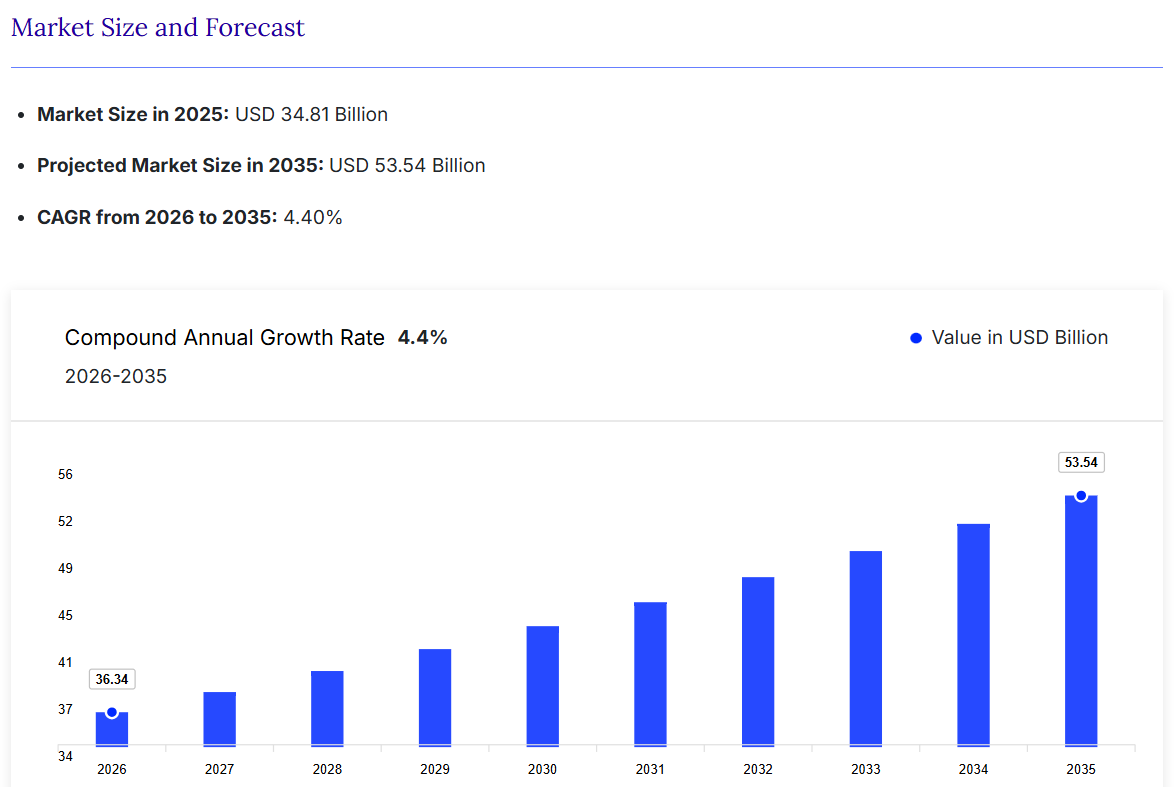
日本の化粧品市場は、2025年時点で約348.1億米ドル規模に達しており、2026年から2035年にかけて年平均成長率(CAGR)4.4%で拡大し、2035年には約535.4億米ドルに達すると予測されている。市場成長を支える主な要因は、自然・オーガニック志向の高まり、男性向け化粧品の拡大、皮膚トラブルへの予防・改善需要、J-Beautyへの関心、オンライン販売の伸長、そしてスキンケア分野における技術革新である。
日本では、消費者が成分の安全性や透明性をより重視するようになっており、非毒性、オーガニック、硫酸塩フリー、パラベンフリーなどを訴求する製品への需要が高まっている。健康意識に加え、環境問題への関心も強まっているため、単に肌に優しいだけでなく、原料調達や製造過程にも配慮したナチュラル系化粧品が支持されやすい。
この流れは、いわゆるクリーンビューティー志向とも重なる。消費者はブランドイメージだけでなく、何が配合され、何が配合されていないかを確認しながら購入する傾向を強めており、企業側には処方のシンプルさや説明の分かりやすさが求められている。
男性向け化粧品市場の拡大も重要である。従来は女性中心だったスキンケアやグルーミングに対し、男性も洗顔、保湿、UV対策などを日常的に取り入れるようになっている。社会的な美意識の変化や身だしなみ意識の高まりが、男性用化粧品需要を押し上げている。
具体例として、Shiseidoは2022年にGen Z男性を対象とするスキンケアブランド「Sidekick」を立ち上げ、ローション、クレンザー、フェイスマスク、モイスチャライザーなどを展開した。これは、男性向けでも単一の洗顔料だけでなく、複数ステップのスキンケアルーティンを提案する動きが進んでいることを示している。
皮膚トラブルへの対応も市場成長の一因である。レポートでは、栄養バランスの乱れ、多忙な生活、汚染などを背景に、ニキビ、色素沈着、紫外線ダメージなどの皮膚問題への関心が高まっているとしている。そのため、皮膚科学的テスト済みや、抗ニキビ、色素沈着対策、UV防御などの機能を持つ製品への需要が強い。
スキンケア分野では、ビタミンC、ペプチド、セラミド、グリコール酸、SPFなどの機能性成分を含む製品が人気を集めている。消費者が「保湿する」だけではなく、「シミを防ぐ」「ハリを保つ」「バリア機能を整える」といった具体的な効果を求めるようになっているためである。
高齢化もスキンケア市場を支える。年齢とともに、たるみ、しわ、色素沈着、乾燥、紫外線ダメージなどが目立ちやすくなるため、エイジングケア製品への需要が拡大している。日本では高齢者人口の多さから、この需要は一時的ではなく構造的なものと考えられる。
一方で、J-Beautyも市場の重要な特徴である。日本発の美容スタイルは、複雑な多段階ケアよりも、シンプルで効率的かつ多機能な製品を重視する傾向があり、海外でも注目を集めている。
J-Beautyで支持される製品としては、保湿機能を持つリップ、ダブルクレンジング製品、高カバー力のファンデーションなどが挙げられている。特に、少ないステップで高い効果を得たいという消費者ニーズと相性が良い。
このため、日本メーカーにとっては国内市場だけでなく海外市場でも、ミニマリズム、機能性、品質を強調することで差別化しやすい。J-BeautyはK-Beautyとは異なるブランド文脈を持ち、繊細な処方や実用性を評価する層に訴求しやすい。
技術面では、マイクロバイオームに着目したスキンケアが進んでいる。プロバイオティクスやプレバイオティクスを化粧品に取り入れ、肌の微生物環境を整えることで、健やかな肌状態や透明感を支えるという考え方が広がっている。
また、幹細胞技術やナノテクノロジーも将来の製品開発テーマとして挙げられている。レポートでは、これらの技術によりコラーゲン生成や皮膚の再生・更新を促す製品開発が期待されるとしている。ただし、こうした分野では実際の効果や表示可能な機能が製品ごとに異なるため、技術の存在そのものと臨床的な有効性は分けて見る必要がある。
市場は製品タイプ別に、スキンケア、ヘアケア、メイクアップ、フレグランス、その他に分類される。このうちスキンケアが大きなシェアを占めている。日本では日常的な保湿・UVケアが定着していることに加え、エイジングケアや機能性成分への関心が高いためである。
ヘアケアも重要なカテゴリーである。シャンプーやコンディショナーだけでなく、頭皮ケア、ダメージ補修、スタイリングなど用途が広く、年齢や性別によってニーズが分かれる。
メイクアップ分野では、ファンデーション、リップ、アイメイクなどが中心である。J-Beautyの文脈では、厚塗りよりも自然な仕上がりやスキンケア機能を兼ねた製品への需要が出やすい。
フレグランスも独立したカテゴリーを形成しているが、日本では比較的控えめな香りを好む消費者も多いため、強い香りよりも日常使いしやすい設計が重要になる可能性がある。
性別では、男性、女性、ユニセックスに分類される。女性が引き続き主要需要層である一方、男性向けの成長が市場構造を変化させている。今後は、男女別だけでなく、年齢やライフスタイル、肌悩み別の細分化がさらに進むと考えられる。
価格帯別では、マスとプレミアムに分類される。マス市場は日常消費を支える一方、プレミアム市場では、高機能成分、ブランド価値、使用感、容器デザイン、エイジングケアなどが差別化要因となる。
日本の消費者は価格だけではなく品質や安全性を重視する傾向があるため、プレミアム化には一定の余地がある。特にスキンケアでは、効果実感や成分への信頼があれば高価格帯でも受け入れられやすい。
流通チャネルでは、スーパー・ハイパーマーケット、コンビニ、専門店、オンライン、その他に分類される。このうちオンライン販売が重要性を高めている。
オンラインの強みは、店舗より幅広い商品を比較でき、価格比較やレビュー確認、割引利用が容易な点にある。特にニッチブランドや海外ブランド、高価格帯商品にとって、物理店舗を大量展開しなくても顧客へ直接訴求できるメリットが大きい。
また、プレミアム化粧品のオンライン投入も市場拡大を支えている。従来は高級化粧品ほど百貨店や専門店が中心だったが、現在ではEC上でもブランド体験を作ることが可能になっており、販売チャネルの境界が薄れている。
ソーシャルメディアやインフルエンサーも販売戦略上の重要性を増している。特にスキンケアでは、使用前後の印象や使用方法を動画で見せやすく、ブランド認知を高める手段として有効である。
競争環境では、L’Oréal、Unilever、Estée Lauderに加え、Shiseido、Procter & Gamble、Kao、Beiersdorf、Koh Gen Do、Mandom、Rohto Pharmaceuticalなどが主要企業として挙げられている。
L’Oréalはスキンケア、メイクアップ、ヘアケアなど幅広いブランドポートフォリオを持ち、異なる価格帯や年齢層をカバーできることが強みである。
Unileverも、Lux、Rexona、Sunsilk、Vaselineなど多数のブランドを通じて、パーソナルケアと美容の複数カテゴリーで展開できる。
Estée Lauderはプレミアムスキンケア、メイクアップ、フレグランスに強く、Clinique、Bobbi Brown、Tom Ford Beautyなど複数ブランドを展開しているため、高価格帯市場での競争力が高い。
Shiseidoは日本発の代表的な化粧品企業として、国内外で高いブランド認知を持つ。男性向けSidekickのように、新たな顧客層へ対応する製品開発も進めている。
KaoやRohto Pharmaceuticalも、日本市場におけるスキンケアや機能性化粧品で強い存在感を持つ。特に日本では、製薬・ヘルスケア企業由来の技術や信頼を美容製品へ応用するケースが多く、科学性を訴求しやすい。
総合すると、日本の化粧品市場は2025年の348.1億米ドルから2035年には535.4億米ドルへ拡大し、CAGR4.4%の安定成長が見込まれる。市場の中心はスキンケアであり、そこに男性向け、自然・オーガニック、皮膚科学、J-Beauty、デジタル販売が成長要素として重なっている。
2035年に向けた主要テーマは、「クリーン・ナチュラル処方」「男性用化粧品」「エイジングケア」「皮膚科学的機能」「J-Beauty」「マイクロバイオーム」「プレミアム化」「EC・SNSマーケティング」に集約できる。
最終的には、日本の化粧品市場は、単にメイクや香りを楽しむ市場から、肌・頭皮の健康維持、予防、美容機能、個人のライフスタイルに合わせた高機能ウェルネス型市場へと発展していくと考えられる。
レポート目次1. Executive Summary
1.1 Market Size, 2025–2026
1.2 Market Growth, 2026(F)–2035(F)
1.3 Key Demand Drivers
1.4 Key Players and Competitive Structure
1.5 Industry Best Practices
1.6 Recent Trends and Developments
1.7 Industry Outlook
2. Market Overview and Stakeholder Insights
2.1 Market Trends
2.2 Key Verticals
2.3 Key Regions
2.4 Supplier Power
2.5 Buyer Power
2.6 Key Market Opportunities and Risks
2.7 Key Initiatives by Stakeholders
3. Economic Summary
3.1 GDP Outlook
3.2 GDP per Capita Growth
3.3 Inflation Trends
3.4 Democracy Index
3.5 Gross Public Debt Ratios
3.6 Balance of Payments (BoP) Position
3.7 Population Outlook
3.8 Urbanization Trends
4. Country Risk Profiles
4.1 Country Risk
4.2 Business Climate
5. Asia-Pacific Cosmetics Products Market Overview
5.1 Key Industry Highlights
5.2 Asia-Pacific Cosmetics Products Historical Market, 2019–2025
5.3 Asia-Pacific Cosmetics Products Market Forecast, 2026–2035
5.4 Asia-Pacific Cosmetics Products Market by Country
5.4.1 China
5.4.2 Japan
5.4.3 India
5.4.4 ASEAN
5.4.5 Australia
5.4.6 Others
6. Japan Cosmetics Products Market Overview
6.1 Key Industry Highlights
6.2 Japan Cosmetics Products Historical Market, 2019–2025
6.3 Japan Cosmetics Products Market Forecast, 2026–2035
7. Japan Cosmetics Products Market by Product Type
7.1 Skin Care
7.1.1 Historical Trend, 2019–2025
7.1.2 Forecast Trend, 2026–2035
7.2 Hair Care
7.2.1 Historical Trend, 2019–2025
7.2.2 Forecast Trend, 2026–2035
7.3 Makeup
7.3.1 Historical Trend, 2019–2025
7.3.2 Forecast Trend, 2026–2035
7.4 Fragrance
7.4.1 Historical Trend, 2019–2025
7.4.2 Forecast Trend, 2026–2035
7.5 Others
8. Japan Cosmetics Products Market by Gender
8.1 Men
8.1.1 Historical Trend, 2019–2025
8.1.2 Forecast Trend, 2026–2035
8.2 Women
8.2.1 Historical Trend, 2019–2025
8.2.2 Forecast Trend, 2026–2035
8.3 Unisex
8.3.1 Historical Trend, 2019–2025
8.3.2 Forecast Trend, 2026–2035
9. Japan Cosmetics Products Market by Price Range
9.1 Mass Market
9.1.1 Historical Trend, 2019–2025
9.1.2 Forecast Trend, 2026–2035
9.2 Premium
9.2.1 Historical Trend, 2019–2025
9.2.2 Forecast Trend, 2026–2035
10. Japan Cosmetics Products Market by Distribution Channel
10.1 Supermarkets and Hypermarkets
10.1.1 Historical Trend, 2019–2025
10.1.2 Forecast Trend, 2026–2035
10.2 Convenience Stores
10.2.1 Historical Trend, 2019–2025
10.2.2 Forecast Trend, 2026–2035
10.3 Specialty Stores
10.3.1 Historical Trend, 2019–2025
10.3.2 Forecast Trend, 2026–2035
10.4 Online
10.4.1 Historical Trend, 2019–2025
10.4.2 Forecast Trend, 2026–2035
10.5 Others
11. Market Dynamics
11.1 SWOT Analysis
11.1.1 Strengths
11.1.2 Weaknesses
11.1.3 Opportunities
11.1.4 Threats
11.2 Porter’s Five Forces Analysis
11.2.1 Bargaining Power of Suppliers
11.2.2 Bargaining Power of Buyers
11.2.3 Threat of New Entrants
11.2.4 Degree of Competitive Rivalry
11.2.5 Threat of Substitutes
11.3 Key Demand Indicators
11.4 Key Price Indicators
12. Value Chain Analysis
13. Trade Data Analysis (HS Code 3304)
13.1 Major Importing Countries
13.1.1 By Volume
13.1.2 By Value
13.2 Major Exporting Countries
13.2.1 By Volume
13.2.2 By Value
14. Competitive Landscape
14.1 Supplier Selection
14.2 Key Global Players
14.3 Key Regional Players
14.4 Key Player Strategies
14.5 Company Profiles
14.5.1 Shiseido Co., Ltd.
14.5.1.1 Company Overview
14.5.1.2 Product Portfolio
14.5.1.3 Geographic Reach and Key Achievements
14.5.1.4 Certifications
14.5.2 Unilever plc
14.5.2.1 Company Overview
14.5.2.2 Product Portfolio
14.5.2.3 Geographic Reach and Key Achievements
14.5.2.4 Certifications
14.5.3 L’Oréal S.A.
14.5.3.1 Company Overview
14.5.3.2 Product Portfolio
14.5.3.3 Geographic Reach and Key Achievements
14.5.3.4 Certifications
14.5.4 The Estée Lauder Companies Inc.
14.5.4.1 Company Overview
14.5.4.2 Product Portfolio
14.5.4.3 Geographic Reach and Key Achievements
14.5.4.4 Certifications
14.5.5 The Procter & Gamble Company
14.5.5.1 Company Overview
14.5.5.2 Product Portfolio
14.5.5.3 Geographic Reach and Key Achievements
14.5.5.4 Certifications
14.5.6 Kao Corporation
14.5.6.1 Company Overview
14.5.6.2 Product Portfolio
14.5.6.3 Geographic Reach and Key Achievements
14.5.6.4 Certifications
14.5.7 Beiersdorf AG
14.5.7.1 Company Overview
14.5.7.2 Product Portfolio
14.5.7.3 Geographic Reach and Key Achievements
14.5.7.4 Certifications
14.5.8 Koh Gen Do Americas, LLC
14.5.8.1 Company Overview
14.5.8.2 Product Portfolio
14.5.8.3 Geographic Reach and Key Achievements
14.5.8.4 Certifications
14.5.9 Mandom Corporation
14.5.9.1 Company Overview
14.5.9.2 Product Portfolio
14.5.9.3 Geographic Reach and Key Achievements
14.5.9.4 Certifications
14.5.10 Rohto Pharmaceutical Co., Ltd. (Hada Labo Tokyo)
14.5.10.1 Company Overview
14.5.10.2 Product Portfolio
14.5.10.3 Geographic Reach and Key Achievements
14.5.10.4 Certifications
14.5.11 Others
 水力発電の日本市場(2026年~2034年) Japan hydropower market size reached 90.9 TWh in 2025. Looking forward, IMARC Group expects the market to reach 115.2 TWh by 2034, exhibiting a growth rate (CAGR) of 2.66% during 2026-2034. The increasing advancements in various technologies, such as integration with the industrial internet of thing…
- Wi-Fiの日本市場(2026年~2034年) The Japan Wi-Fi market size reached USD 2,348.4 Million in 2025. Looking forward, IMARC Group expects the market to reach USD 5,989.3 Million by 2034, exhibiting a growth rate (CAGR) of 10.96% during 2026-2034. The rising proliferation of smart devices, growing adoption of Wi-Fi standards such as Wi…
- 電磁鋼板の日本市場(2026年~2034年) Japan electrical steel market size reached USD 2,641.0 Million in 2025. Looking forward, IMARC Group expects the market to reach USD 4,492.3 Million by 2034, exhibiting a growth rate (CAGR) of 6.08% during 2026-2034. The market is witnessing a positive outlook due to the growing encouragement from g…
- 日本のコンテナ型データセンター市場(2026年~2034年) The Japan containerized data center market size reached USD 918.37 Million in 2025. The market is projected to reach USD 4,286.97 Million by 2034, exhibiting a growth rate (CAGR) of 18.67% during 2026-2034. The market is driven by the rising demand for scalable, flexible, and energy-efficient infras…
- インタラクティブキオスクの日本市場(2026年~2034年) Japan interactive kiosk market size reached USD 1.3 Billion in 2025. Looking forward, IMARC Group expects the market to reach USD 2.9 Billion by 2034, exhibiting a growth rate (CAGR) of 9.01% during 2026-2034. The rising adoption of cutting-edge technologies, such as touchscreen interfaces, advanced…